Lessons from Toastmasters
I consider myself an engineer and public speaking is not my strongest suit. An ex-manager convinced me that improving my communication skills can do wonders for me, so I joined Sofia S&L Toastmasters Club. This is my blogpost about what I learnt over 2 years of club sessions.
What is Toastmasters? It's a community that meets up to practice and improve public speaking skills. To me, meetups felt like a safe place to experiment and find what works and what doesn't. It's self-driven - course material is provided but optional and it's up to the individual how much effort they want to put in.
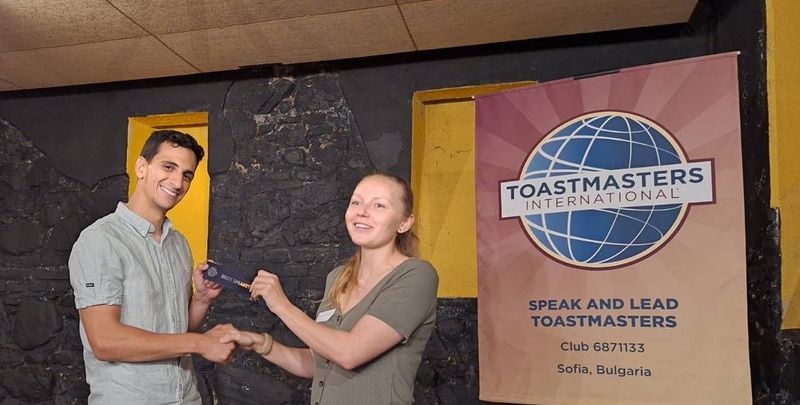
There is an emphasis on evaluation; meaning I will receive feedback - or I will be expected to provide it. That's the best part - public speaking can be intimidating and I am used to avoiding it whenever I can. When I don't have a choice, I would get a pat on the back. Even when I know for a fact that I did terrible, people would still congratulate me for the effort. Which is a great way to show support but a terrible way to learn. And that's why Toastmasters is great.
Giving feedback is always easier than implementing it. I found that people often struggle with structuring their speech and sometimes ramble without a clear takeaway. The most common advice I'd give out is on structure - have a clear thing to say and use the rest of the speech to support it. If I can't put my message into one simple sentence, it's not clear enough. Another common feedback is about nervousness - as it always impacts the quality of speech. The best way to overcome that is practice - I might still get nervous but it's mainly internal - it doesn't show as much when I've spoken in front of an audience enough.
On receiving feedback - the better I do, the more I get. Actionable feedback requires people to pay attention to what I say and how I say it. And that's the main goal - to deliver a presentation and have people listen. The worst presentations get the least feedback - the audience would absent-mindedly give general, cookie-cutter tips. So having feedback is a good sign. However, not all feedback is equal - some is good, some not-so-good. Having several people pointing out the same flaw in my presentation is a positive sign that they are right. A one-off comment is more difficult to figure out - it can be a golden piece of advice, a matter of preference or flat-out wrong.
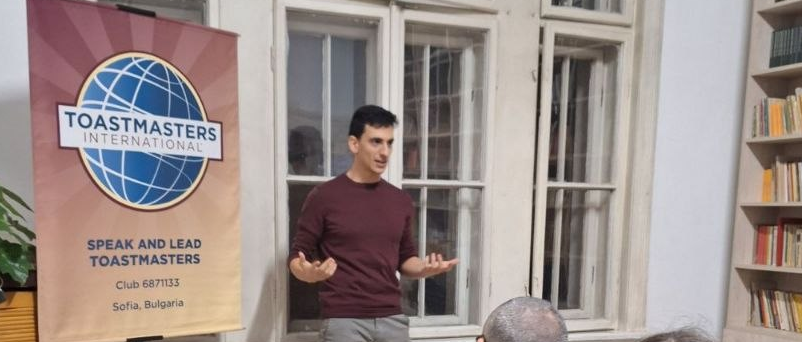
There are basically two forms of speaking - improv (no prep) and prepared speeches. I wanted to get better at both, and I did have an opportunity to practice. It became painfully obvious that I'm terrible at improvising. At almost every session I attempted improv and every time I felt like my mind was blank. Maybe this format is not the best way to pick up the skill or maybe it's something that one is either born with or not. Nevertheless, the speaking I came up with on the spot always felt dull and uninspiring and I didn't find myself progressing much. However, it's fun and I'd always recommend doing it.
For prepared speeches - that's a learnable skill. A perfect speech doesn't exist, though there are better and worse speeches. I delivered 10 speeches on whatever topics I could think of - ranging from personal travel stories, advocating for voting or taxation policies and even attempted a modified version of Theodore Roosevelt's famous 'Man in the Arena' speech.
My top lesson is to invoke emotions. It truly is the best way to make my speech remembered. People are way more receptive when there are feelings. What worked is to keep asking myself "what do I want people to feel when I'm saying this part out loud?" For example, if I'm introducing a problem (that I'd later provide a solution for) - show anger by raising my voice at the precise word. Or step back to show I'm distancing myself from an argument I don't believe in. To take it one step further and broadcast revulsion - a grimace on top. The more emotions, the better. It should be obvious which emotion fits where. Yes, giving a speech that way feels a bit like a performance. And it is. Indeed, it's work to deliberate which emotion goes where and how best to instill it. And I didn't always spend the effort. But every time I did - I could tell people were paying more attention. I received way more comments and opinions after the speech. The feedback would be more extensive. In other words, the audience would be much more involved.
I experimented with using AI when preparing a speech. The results were promising, though with some caution. The AI is pretty bad at generating a speech for me - the result is overly verbose and not my style. After all, I'd be the one delivering the speech - and it being my style is absolutely essential. However, AI is a great critic. I'd write out a rough draft of what I want to say, then paste it into a prompt and ask for advice. There are always good ideas - like suggestions on particular gestures to include.
Some personal findings:
- I'm a slow speaker. This isn't necessarily a problem - though it's good to know that I can't speak fast and coherently
- My first draft always comes out much longer. I'd spend much more time figuring out what to cut than writing
- My concluding remarks are usually lackluster. I have yet to find a formula that works
- When speaking in front of an audience, my time always came up shorter compared to practice, probably due to anxiety
In the end, I did feel like my public speaking improved. However, not in the way I expected - I just learnt on what to focus when preparing. When I wing it, I'm just as bad as before. But Toastmasters sure helped me out in knowing what to prepare and I'd recommend it to anyone struggling with public speaking.